"Grandpa, are you sleeping?" — at 67 I was falling asleep at my grandson's ballgames, until a forgotten 3,000-year-old seed gave me my energy, my nights and my marriage back.
Walt, 67, a retired lineman from Ohio, was told to "live with it." Here's what nobody told him about the silent inflammation draining men over 60, and the one compound that turned it around.
The day my grandson saw me fall asleep
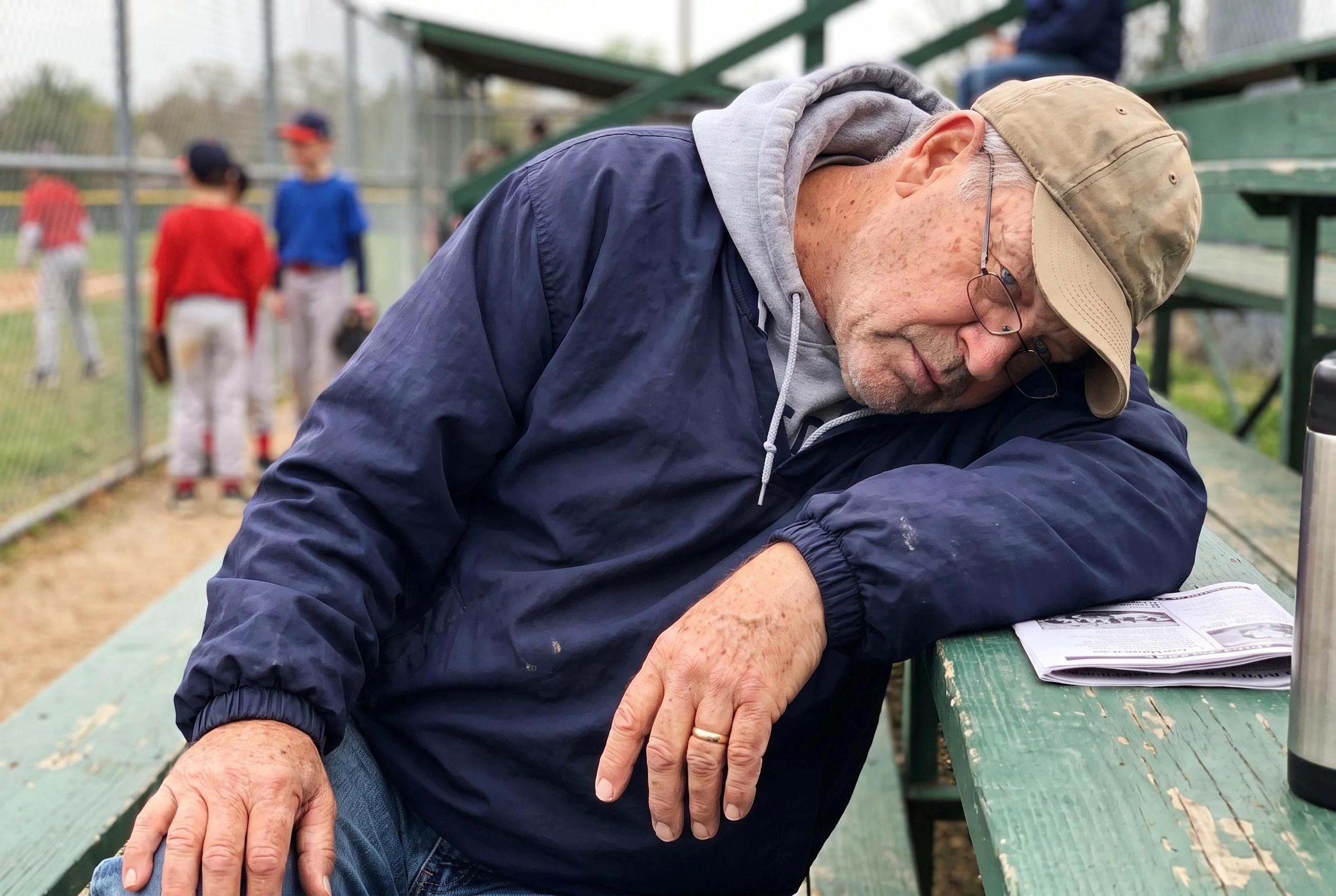
"Grandpa, are you sleeping?"
My grandson Tyler was eight that spring. It was his first real Little League game. He stood at the fence in his too-big jersey, glove in one hand, looking up at me in the stands.
I had missed his hit. His first hit ever. I was asleep sitting up, chin on my chest, in the middle of a Saturday afternoon.
The other parents looked over. My daughter looked at me like she didn't know who I was. Tyler just looked sad. Not mad. Sad. Like his grandpa had already started to go away.
I told him I was just resting my eyes. He knew I was lying. Kids always know.
I drove home with my hands tight on the wheel. I didn't turn on the radio. I kept hearing his little voice. Grandpa, are you sleeping?
My name is Walt. I'm 67. I climbed power poles in Ohio for 31 years. Ice storms, heat waves, 2 a.m. callouts. I never missed a shift. I was the guy other guys called when a job was hard.
And now I couldn't stay awake for an eight-year-old's ball game.
That night I sat on the edge of the bed and said it out loud. "This is not how it ends."
It didn't happen all at once
Looking back, it crept up on me over about two years.
At first it was small. I'd wake up once in the night. Then twice. Then three or four times, staring at the ceiling fan, wide awake at 3 a.m. for no reason at all.
In the morning I felt like I hadn't slept. My back was stiff. My knees ached when I got out of the truck. My hands felt thick and slow in the cold.
I told myself it was age. Everybody slows down. That's what you say.
But then it got worse.
Then I stopped being myself
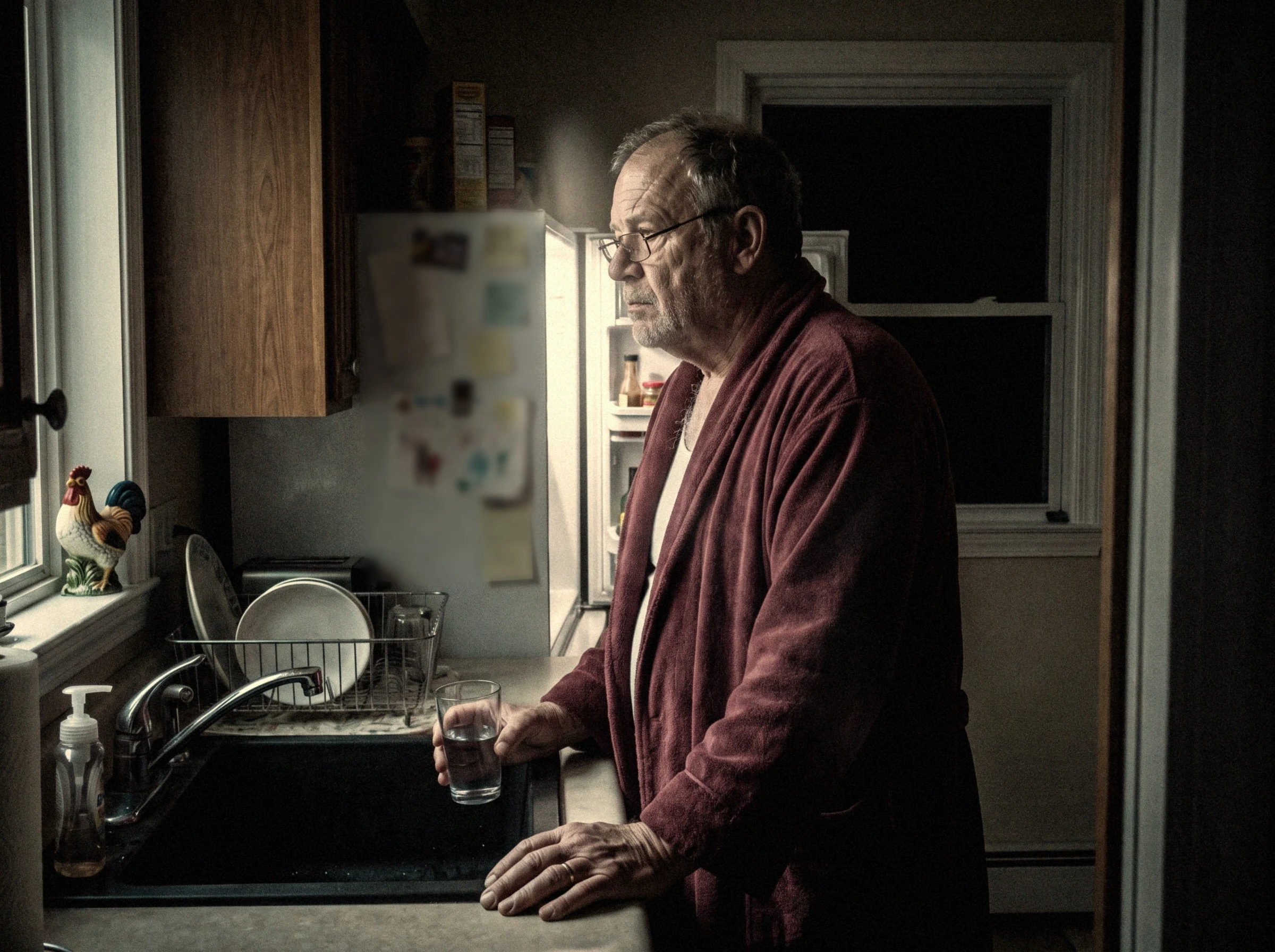
By noon I was done. I'd sit in my recliner "for a minute" and wake up two hours later with the TV still on.
I stopped working in the garage. The boat sat under its tarp all summer. My buddies at the VFW asked where I'd been. I said I'd been busy. I hadn't been busy. I'd been tired.
And I got short. That's the part I'm not proud of. I snapped at Diane over nothing. The dishwasher. The thermostat. Where the keys were. Forty-one years married, and I was talking to her like she was in my way.
The closeness went too. I'll keep this part simple. A man knows when he's not the man he was. I'd go to bed early, roll over, and act like I was asleep. Diane never said anything. She didn't have to. One night I heard her quietly ask, "Walt, is it me?"
It wasn't her. It was never her. I just didn't feel like a man anymore. I felt like a tired old copy of one.
My son pulled me aside that November at Thanksgiving. "Dad, you okay? You seem... gone."
"I'm fine," I said.
I wasn't fine. I was scared. Scared this was the rest of my life. Scared I'd be the grandpa who sleeps in the chair while the kids grow up without him.
"You'll have to live with it"
Diane finally made me an appointment. I went, mostly so she'd stop worrying.
He listened for about six minutes. Took my blood pressure. Asked about my sleep. Said my numbers were "about what you'd expect at your age."
Then he said the words I'll never forget.
"Walt, you're 67. Some of this you'll just have to live with."
Live with it. He didn't look for a cause. He didn't order any tests. He just told me to get used to feeling this way.
If you feel this bad every single day, you are not "fine for your age." Something is wrong. And nobody is looking for it.
He offered a sleeping pill. I tried it for a while. I slept, sort of, and woke up foggy, like my head was full of wet cotton. I felt worse during the day, not better.
Nobody asked me why I was waking up. Nobody asked why my joints ached, why my energy was gone, why my drive had disappeared. Everybody treated the pieces. Nobody looked for the thing underneath.
So I did what a lineman does. I started troubleshooting on my own.
Everything I tried, what it cost me, and why it failed
Here's my list. Maybe you've got the same one.
- ✕ More coffee. Four, five cups a day. I got jittery, then crashed harder at 2 p.m.
- ✕ Energy drinks. My grandson's dad drinks them. Gave me a racing heart and nothing else.
- ✕ Melatonin. Helped me fall asleep. Didn't stop me waking at 3 a.m.
- ✕ "Testosterone booster" gummies from a TV ad. Expensive. Tasted like candy. Did nothing I could feel.
- ✕ No screens after dinner. Good idea. Same nights.
- ✕ Walking every morning. Good for me, I'm sure. But I was dragging myself around the block like I was carrying a pole on my back.
- ✕ A fancy pillow, a new mattress topper. Hundreds of dollars. Same 3 a.m. ceiling fan.
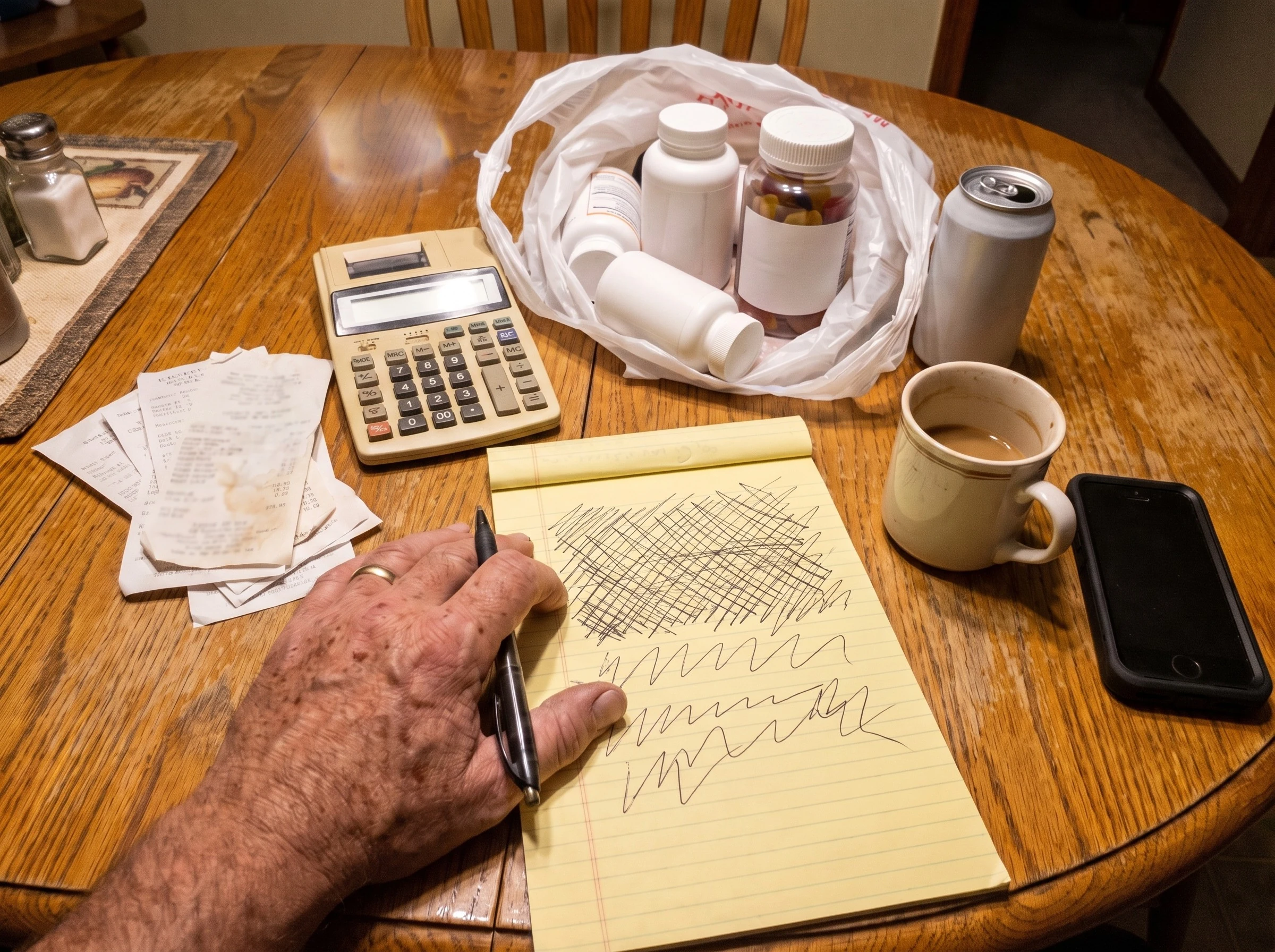
One night I added it all up at the kitchen table. The coffee, the energy drinks, the melatonin, the gummies, the pillow, the topper. Hundreds of dollars, easy. And I was still staring at the ceiling fan at 3 a.m.
Each thing pushed on one problem. More caffeine for the tired. A pill for the sleep. Gummies for the drive. Not one of them asked why all of it was happening at the same time.
Here's what they don't tell you in the drugstore aisle: every one of those products is built to cover a symptom so you come back and buy it again. The tired comes back. The 3 a.m. comes back. And the thing underneath keeps getting worse, month after month, while you keep paying.
I was close to giving up. I really was starting to believe the doctor. Live with it.
The video my buddy sent at 11:34 PM
Every Thursday I have breakfast with Ray at the diner off Route 33. We worked the same crew for 20 years.
That Thursday I barely touched my eggs. Ray noticed. "You look like hell, Walt."
So I told him. The nights. The tiredness. Snapping at Diane. Falling asleep at Tyler's game. I'd never said all of it out loud before.
Ray didn't laugh. He put down his fork.
"I was the same way two winters ago," he said. "Then I found out what was really going on." "I'll send you something tonight. Watch the whole thing. Don't skip around."
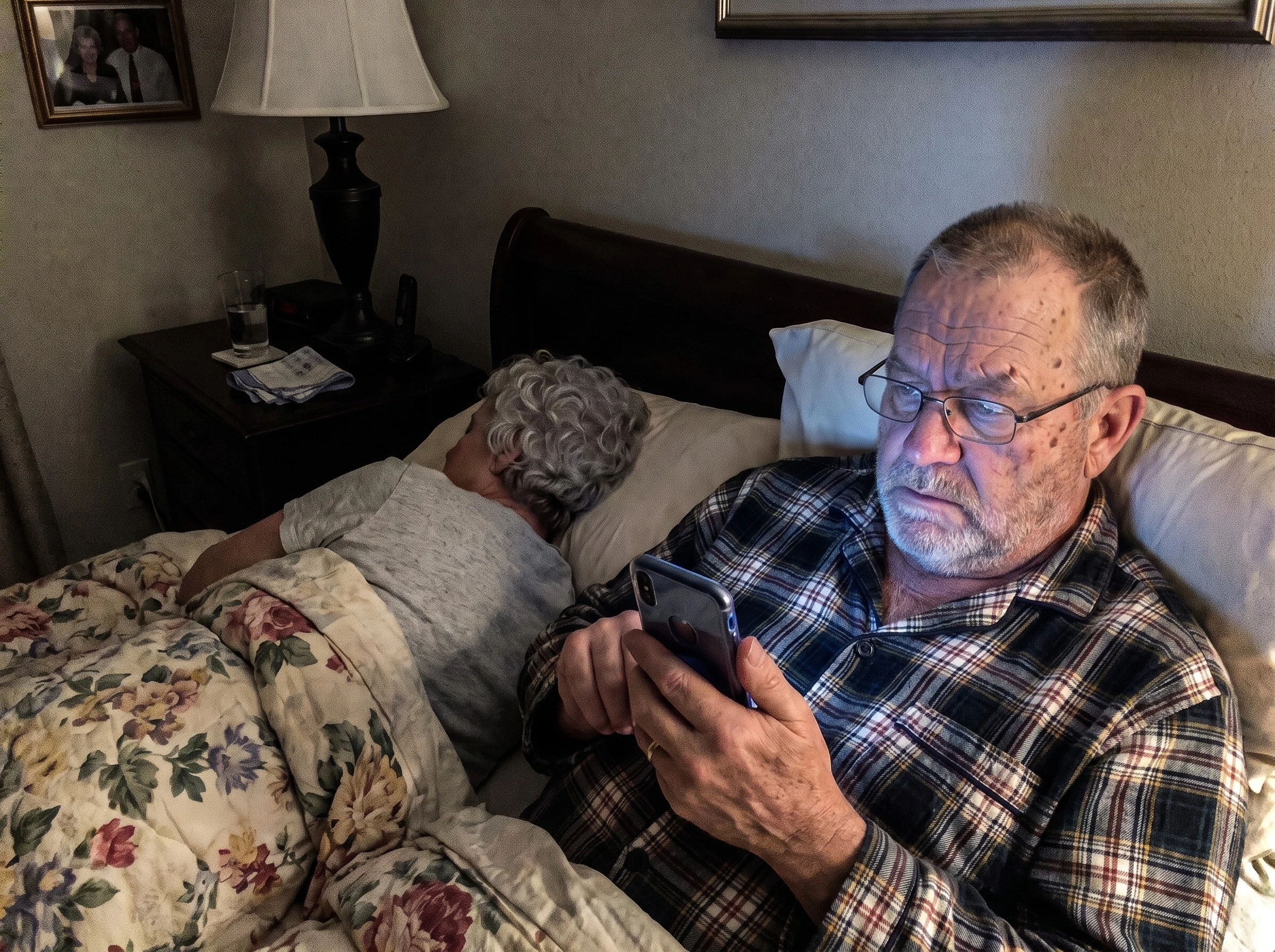
That night I was awake, as usual. 11:34 PM. My phone buzzed.
A link from Ray. One line: "Watch this. It's what I told you about."
I almost didn't open it. I figured it'd be another sales pitch. But I couldn't sleep anyway, so I put my reading glasses on and pressed play.
"Most men your age have inflammation nobody is looking for"
The video was a calm, gray-haired researcher sitting at a plain desk. No fancy set. He said he'd spent decades studying inflammation in the body. He talked slow and plain, like he was explaining something to a neighbor.
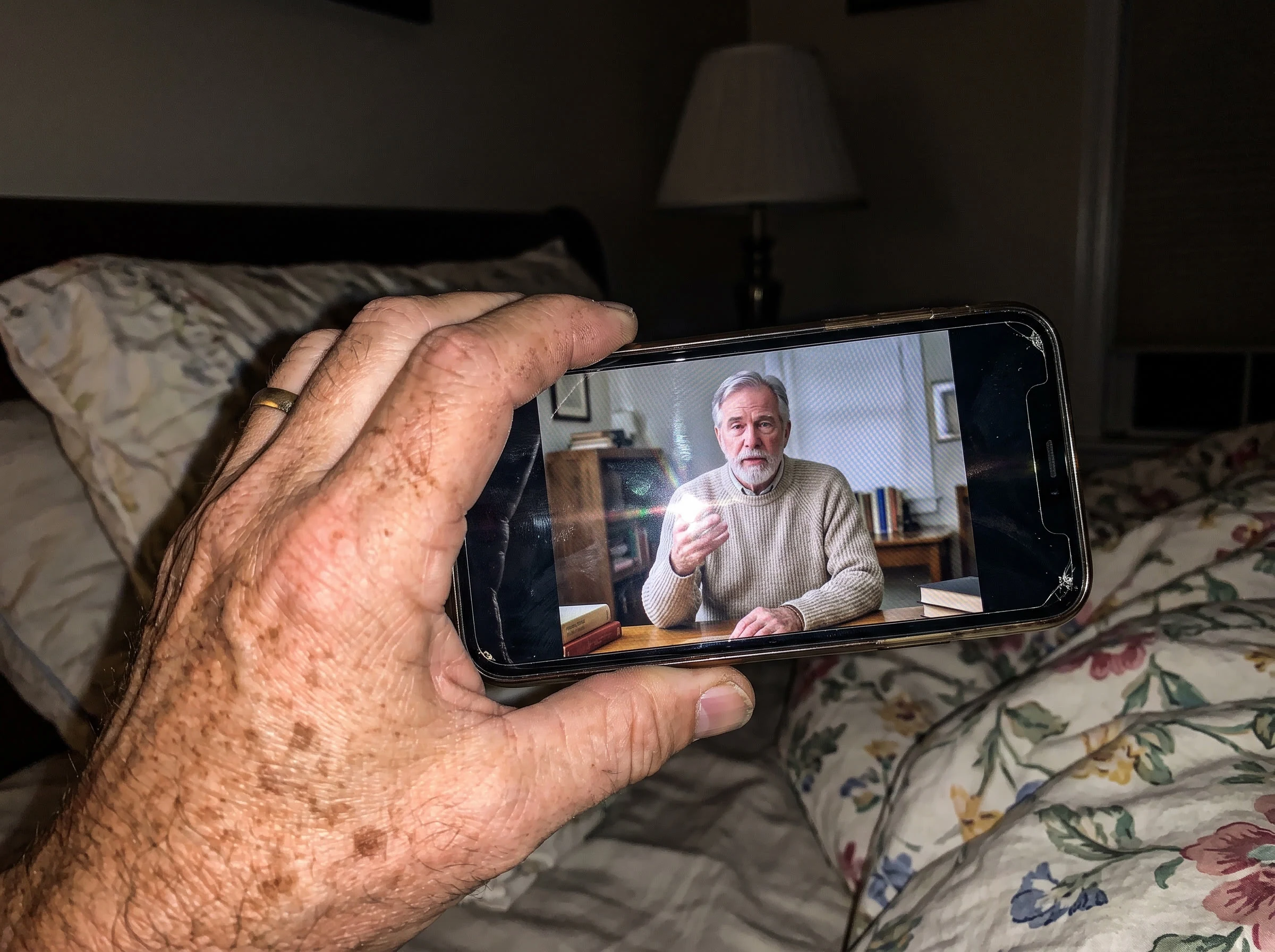
The first thing he said stopped me cold.
"Most men over 60 think they're tired because they're old. Many of them are tired because of low, constant inflammation inside the body, every day, and nobody has looked for it."
He called it silent inflammation.
He explained it like this. When you cut your hand, it gets red, hot and swollen. That's inflammation. That's your body fighting. It flares up, does its job, and calms back down.
But there's another kind. It doesn't flare up and go away. It stays switched on, low and steady, for months or years. You can't see it. It doesn't hurt in one spot. It just sits there, wearing you down from the inside.
He explained what that looks like inside you. Your immune cells keep sending out alarm signals. Those signals travel through your blood to your joints, your blood vessel walls and your muscles. Tissue that should be resting stays irritated. Day after day, it adds up.
That hit me. Nothing failed all at once. It all just got a little worse every month.
What silent inflammation does to a man
Then he walked through what this low, steady inflammation can do over time. And it was like he was reading my diary.
It wears on your joints. That stiff back. The knees that ache getting out of the truck. The thick, slow hands in the morning.
It affects your blood flow. When the walls of your blood vessels stay irritated, he said, they can tighten up. Blood moves slower. Less of it gets where it needs to go. For a man, that can show up as cold hands and feet, tired legs, and, he said gently, a drive that just isn't there anymore.
I put my phone down for a second when he said that. Then I picked it back up.
It drains your energy. Your body spends so much effort fighting this constant inflammation, he said, that there's less left over for you. Less for your muscles. Less for your mind. You feel worn out at noon and don't know why.
It can keep you from resting. A body that's always on alert, always fighting, has a harder time settling down at night. So you wake up at 3 a.m., wide awake, for no reason you can name.
And it can change your mood. When you're tired and achy all the time, you get short. You pull away. You stop being the husband and grandpa you want to be.
Every single thing on his list was me. The nights. The energy. The joints. The temper. The bedroom. It wasn't five different problems. It was one problem showing up in five places.
It's NOT your age. It's NOT your willpower. It's NOT "just getting old." It's the inflammation nobody looked for.
What nobody told me in two years
I sat there in the dark and got angry. Not at the man in the video. At everybody before him.
Two years. A checkup. A sleeping pill. A wall of products at the drugstore. And not one person ever said the word "inflammation" to me. Not one person asked why a man who climbed poles in ice storms was falling asleep in a lawn chair.
Nobody said, "Walt, let's find out what's underneath." They said, "Live with it." They said, "Try this." They said, "Come back in six months."
That's what they don't tell you. You can spend years treating the pieces while the real problem runs your life.
Why nothing I tried ever worked
Then he said the thing that made it all make sense.
"Most of what people try works on the symptoms, not the inflammation underneath."
Coffee pushes on the tired. A sleeping pill pushes on the night. Gummies push on the drive. Each one goes after one symptom. None of them do anything about the inflammation underneath. So the inflammation keeps going, and the symptoms keep coming back.
I had spent two years treating symptoms one at a time. Not once had I done anything about the cause.
Your body has its own ways of calming inflammation, he said. But when it's been switched on for years, the body can use some help settling it down.
That was what I was missing.
"I've tried supplements. They don't work."
When he started talking about what can help, I almost turned it off. I'd been let down too many times. I figured he'd list the same tired stuff I'd seen on every bottle at the drugstore.
He didn't.
He talked about one compound I had never heard of in my life.
Thymoquinone.
He said it's the main active compound in one specific plant: Nigella sativa, the black seed. And he said researchers around the world have been studying it for years, with a large body of published research looking at how it works in the body.
Here's what he said thymoquinone does, in plain words. This is the part that changed everything for me:
- It goes straight after the inflammation response. It works on the cause, not just the symptoms. That's the piece every other thing I tried was missing.
- It supports the body's antioxidant defenses. It helps the body protect its own cells from the daily wear and tear that keeps inflammation going.
- It supports healthy circulation. With inflammation calmer, blood vessel walls can relax and blood can move the way it's supposed to.
That was it. The missing piece. Not another product for one symptom. Something that goes after what's underneath, so the energy, the rest and the drive can come back.
"When you calm the inflammation," he said, "everything it's been stealing from you can start to come back on its own. Rest. Energy. Steadier mood. Better blood flow. You're not forcing them. You're getting the thing in the way out of the way."
I sat there at midnight with my reading glasses on and felt something I hadn't felt in a long time.
Hope.
A seed found in a king's tomb over 3,000 years ago
The next morning I couldn't stop thinking about it. So I did my own digging at the kitchen table while Diane made coffee.
What I found gave me chills.
Black seed is not some new lab invention. It has been around people for thousands of years.
Black seeds were found in Tutankhamun's tomb in ancient Egypt, more than 3,000 years ago. A king's tomb, full of gold and treasure, and black seed was in there too.

And there's a saying about black seed that is over 1,400 years old: that there is healing in it for everything except death.
I'm a practical man. I don't take that to mean black seed fixes everything. Nothing does. And I don't believe in magic. But when a seed has been around people for over 3,000 years, and modern researchers are now studying the very compound inside it, I pay attention.
I wasn't looking at a fad. I was looking at a forgotten seed that had been sitting in a king's tomb for over 3,000 years, and modern science was finally catching up to it. Why had nobody ever told me about this?
Why the kind of black seed oil matters
Ray called me that afternoon. "Did you watch it?"
"Twice," I said.
That night I told Diane. She put down her fork. "Walt, a seed? Off a video somebody sent you at midnight?"
I didn't blame her. I'd have said the same thing a month earlier. So I told her what I'd learned. It wasn't about the seed being magic. It was about one compound, thymoquinone, and what it does about the inflammation underneath everything I'd been fighting. She listened. She didn't say yes. But she didn't say no either.
Now, you're probably thinking what I thought next: why not just buy any black seed oil off the shelf?
Ray told me the thing the video stressed too: not all black seed oil is the same. The amount of thymoquinone can be very different from one oil to the next. If you want thymoquinone, you want an oil where the label actually tells you how much thymoquinone is in it.
He also told me what he used. I'll tell you what it is at the end of this, because honestly, the product is not the point of my story. The inflammation is the point. But I'll share exactly what I took, and how to find it.
Week one: nothing. I almost quit.
I'll be honest with you, because I wish somebody had been honest with me.
The first week, nothing happened. Nothing at all.
I took it every morning with breakfast, just like the label said. And I woke up at 3 a.m. the same as always. Dragged through the day the same as always.
By day six I was annoyed. "Another waste of money," I told Diane. "I knew it."
She did something she doesn't do often. She put her hand on my arm and said, "Walt. Two years to get this way. Give it more than a week."
So I kept going. Mostly so I could tell Ray he was wrong.
The morning I woke up and it was light out
I remember it was a Tuesday, around day eleven or twelve.
I opened my eyes, and the room was bright. Sun coming through the blinds.
I looked at the clock and couldn't believe it. I'd slept through. The whole night. No 3 a.m. ceiling fan. No lying there for an hour. Just sleep, the deep kind, the kind I hadn't had in I don't know how long.
I didn't say anything to Diane. I thought it was a fluke.
It wasn't. It started happening more. Not every night at first. But more nights than not.
Week three: the garage door went up
Somewhere around the third week, I noticed I wasn't sitting in the recliner after lunch.
I was in the garage. I'd pulled the tarp off the boat. I was sanding a spot on the hull I'd been meaning to fix for two summers.
Diane came out with a glass of iced tea and just stood there.
"What?" I said.
"Nothing," she said, smiling. "It's just good to see you out here."
My knees didn't stop me. The morning stiffness that used to take an hour to shake off was barely there. My hands gripped the sander like they did when I was 50. I wasn't dragging anymore. I had energy left at 4 in the afternoon. I was doing.
Week five: I stopped snapping
This one Diane noticed before I did.
One evening the dishwasher wasn't loaded the way I like it. Old Walt would have made a comment. New Walt just fixed it and kept talking about Tyler's next game.
She told me later, "You've been nicer, you know. You're back to being you."
I didn't know a man could feel that lucky to hear something so simple.
And the rest? I'll just say this.
The closeness came back.
I'm not going to say more than that. Some things are between a man and his wife. But one night Diane laughed, really laughed, the way she did when we were thirty, and I felt like the man she married.
Nobody had to say "Is it me?" anymore.

Three months later: the full game
Tyler's last game of the season was a hot Saturday in late summer.
I got there early. I sat in the front row of those same aluminum bleachers.
And I watched every pitch.
Every single one. I yelled when he caught a pop fly. I stood up when he got on base. In the fifth inning he hit one past the shortstop, ran to first, and looked straight up into the stands to find me.
I was standing up, clapping so hard my hands stung.
After the game he ran over, all sweaty and grinning. "Grandpa, did you see it? Did you see my hit?"
"I saw it, buddy," I said. "I saw the whole thing."
Then we went to the park and played catch until the streetlights came on. My daughter had to call us twice for dinner.
On the way to the car Tyler took my hand and said, "You weren't sleepy today, Grandpa."
No, buddy. Not today. Not anymore.

Two years ago vs. today
I want to show you what changed, plain as I can.
Two years ago: Up three, four times a night staring at the ceiling fan. Asleep in the recliner by 1 p.m. Boat under a tarp. Snapping at Diane over the dishwasher. Rolling over in bed and pretending to sleep. Missing my grandson's first hit because I couldn't keep my eyes open.
Today: Sleeping through most nights and waking up when it's light out. Energy all afternoon. Out in the garage, out on the lake. Laughing with Diane like we used to. Standing in the bleachers for every pitch, then playing catch till the streetlights come on.
Same man. Same age. Same knees. The difference was going after the inflammation instead of living with it.
Other men wrote to me after I shared my story
Reader stories (illustrative)
"This is me. Word for word. The recliner, the snapping at my wife, all of it. My doctor said the same thing yours did." — a reader, 64
"I've been told 'that's just age' for three years. Reading this I realized nobody ever asked me about inflammation either." — a reader, 70
"The part about the grandson got me. I fell asleep at my granddaughter's recital last spring. Not doing that again." — a reader, 66
"My husband is exactly like Walt was. Sending this to him tonight." — a reader's wife, 61
What I want you to know
I'm not a scientist. I'm a retired lineman. I can only tell you what happened to me and what I learned.
Here's what I learned. Feeling tired, stiff, short-tempered and "done" at 60, 65, 70 is not always just old age. For a lot of us, it may be silent inflammation that nobody ever looked for. And you don't have to just "live with it."
Every person is different, and I can't promise you'll have the same experience I did. But I can tell you what I'd do if I were you, sitting where I was two years ago.
You've got two roads. Road one: keep living with it, like I was told. Another year of 3 a.m. ceilings, afternoons in the recliner, and games you're only half there for. Road two: go after the inflammation underneath, starting this week.
I took the second road. I only wish I'd taken it sooner.
My biggest regret is the two years I lost. Two summers the boat sat under a tarp. A hundred nights staring at the ceiling fan. A first hit I missed and can never get back.
Every day you wait is another day that inflammation keeps taking from you. Another afternoon in the recliner. Another night you roll over. Another game you're half there for. Those days don't come back. I know. I lost two years of them.
If you take medication or have a health condition, keep taking your medications as prescribed and talk to your doctor before adding any supplement. I told mine. He said it was fine to try.
What I took
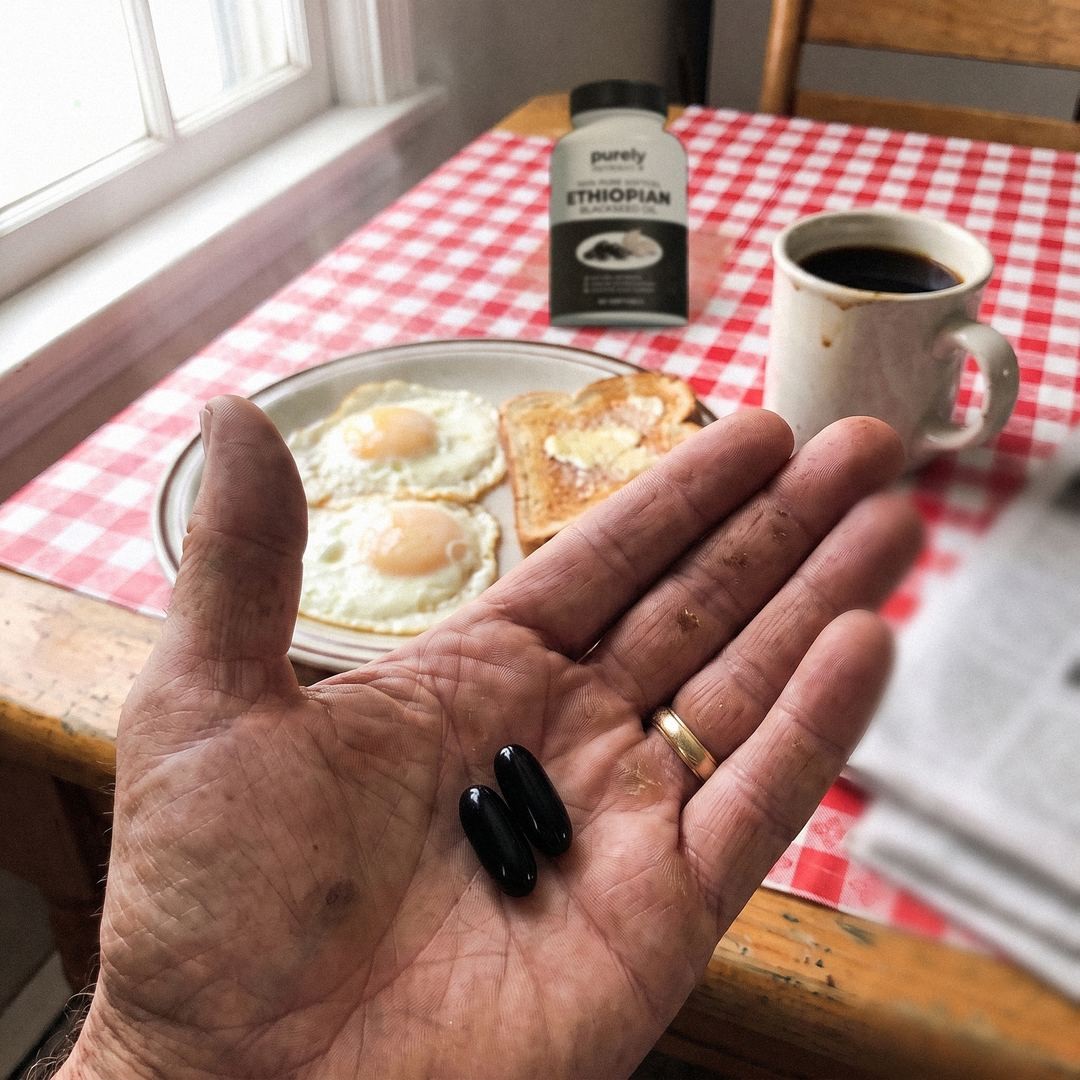
Ray's bottle, and now mine, is Purely Nutrient Ethiopian Black Seed Oil, made from black seeds grown in the Ethiopian highlands.
I'll be honest: when Ray showed me the bottle, I was still skeptical. So I turned it around and read the label. It says how much thymoquinone is in it, the exact compound from the video. That's what got me to try it.
Here's why I stuck with it, after looking at a lot of labels:
- Up to 4.64% thymoquinone. That's the compound the video talked about, and they actually tell you how much is in there.
- Easy black softgels. No spoonfuls of bitter oil. Just 2 softgels, once a day, with breakfast.
- 60 softgels per bottle = a full 30-day supply.
- Rated 4.8 out of 5 from 4,463 reviews. I wasn't the first guy to try it, and that helped me feel better about it.
What I like less
Just one. It took almost two weeks before I noticed anything, so you need a little patience.
The offer: read this before you pick
Choose Your Supply
- Buy 1 (1 bottle): $39.95
$79.90 - Buy 2, Get 1 Free (3 bottles): $79.90
$119.85 - Buy 3, Get 2 Free (5 bottles): $119.85
$199.75
Prices as listed on the Purely Nutrient order page on October 14, 2026. The order page also offers "Save 10% more with automatic refills" ("zero commitment, cancel anytime"). Today's prices are shown on the order page.
When I saw the price, $39.95, I thought about the hundreds of dollars I'd already burned through on coffee, gummies, a pillow and a mattress topper that did nothing.
Here's my honest advice on which one to pick:
- 1 bottle: Fine if you just want to try it. But it's 30 days, and I didn't notice a thing until almost two weeks in. If you run out right when it starts working, you're starting over.
- Buy 2, Get 1 Free: Better. Enough to really give it a fair shot.
- Buy 3, Get 2 Free: ✅ what I'd pick. The lowest price per bottle, and enough time to find out what your body does when that inflammation finally calms down. No running out at the worst moment.
When you click "Check availability," you'll go to the secure Purely Nutrient page, where you can see today's price and pick your bottles.
Quick heads-up so you don't get confused: on the next page it's called Purely Nutrient Ethiopian Black Seed Oil — same black softgels, same 4.64% thymoquinone I told you about. It's their main page, so it's built for everybody, men and women, with a big sale banner at the top. Don't let that throw you. Go straight to the three bottle choices — I went with Buy 3, Get 2 Free — and you're covered by the 30-day money-back guarantee.
CHECK AVAILABILITY →
30-day money-back guarantee. If it's not for you, request a refund within 30 days of delivery. The risk is on them, not you. You've got nothing to lose but the tired. They call it "Feel better or it's free."
YES, I WANT MY ENERGY BACK — CHECK TODAY'S PRICE →
What verified buyers say
"I hadn't slept through the night in over a decade."
"I'd wake up 3-4 times every single night and never felt rested. My doctor wanted to put me on sleeping pills, but I wanted something natural. Ethiopian Black Seed Oil changed everything. I sleep deeply now, wake up once at most, and actually feel energized in the morning. It's life-changing."
— Jason M., 62, Verified Customer
"I've spent thousands on supplements that did absolutely nothing."
"I was skeptical about black seed oil, but I was desperate. The difference with Ethiopian oil is night and day — you can actually feel it working. My joint pain is gone, my skin is glowing, and I have energy that lasts all day. I wish I'd found this years ago instead of wasting money on junk that didn't work."
— Michael R., 55, Verified Customer
"My brain fog was so bad I thought something was seriously wrong with me."
"I couldn't focus at work, I'd forget why I walked into a room, and I felt like I was losing my sharpness. Two weeks into taking Ethiopian Black Seed Oil and it was like someone turned the lights back on in my brain. I'm sharp again, my memory is back, and I feel mentally clear for the first time in years."
— David L., 61, Verified Customer
Rated 4.8 out of 5 from 4,463 reviews.
Questions people ask me
How do I take it?
2 black softgels, once a day. I take mine with breakfast.
How long does one bottle last?
Each bottle has 60 softgels. That's a 30-day supply.
What if it's not for me?
There's a 30-day money-back guarantee. You can request a refund within 30 days of delivery.
I take medication. Can I still try it?
Keep taking your medication exactly as prescribed, and talk to your doctor before adding any supplement. That's what I did. This doesn't replace anything your doctor gave you.
CHECK AVAILABILITY →
Don't wait two years like I did. Tyler's still talking about that hit. I'm just glad I was awake to see it.
— Walt, 67, Ohio
P.S. Last week Tyler asked if I'd coach first base next season. I said yes before he finished the question. Two years ago I couldn't stay awake in the bleachers. If you're the grandpa in the lawn chair right now, don't wait as long as I did.
YES, SHOW ME TODAY'S PRICE →
These statements have not been evaluated by the Food and Drug Administration. This product is not intended to diagnose, treat, cure, or prevent any disease. Individual results vary. This story reflects one person's experience. Consult your doctor before use, especially if you take medication.